

Why Do I Get Traffic but No Sales? The Real Causes and What to Check
People come to your site, but the orders don't show up. Usually it's not a single cause — it's a chain that breaks somewhere. Here's where to look.
“I’ve got traffic. I can see visitors in Analytics. But the sales aren’t coming.”
It’s one of the most common questions we get. And it’s frustrating, because it seems illogical: you spend money on ads, people land on your site, but the basket stays empty.
The good news: it’s almost never a single mysterious cause. It’s a chain — from the click all the way to the order — that breaks at one particular point. Your job is to find that point.
📌 What you’ll learn: The 5 areas where the sale usually gets lost, the order in which to check them, and how to work out which one is YOUR problem.
🔗 A sale is a chain, not a button
Before anything else, think about the real journey a visitor takes:
- They see the ad (or search on Google) and click.
- They land on a page.
- They understand what you sell and who it’s for.
- They trust you enough to buy.
- They add to the basket.
- They complete the checkout.
If any link in the chain gives way, traffic stays traffic. It doesn’t become a sale.
Traffic is neither the problem nor the solution. Traffic is just the raw material. Conversion is what you do with it.
Let’s go through the links, in the order worth checking them.
🎯 1. The traffic isn’t qualified
The first question isn’t “how many” people come. It’s “which” people come.
You can have 10,000 visits a month, but if they’re coming for something completely different from what you sell, no checkout is going to save them.
Signs you have unqualified traffic:
- A very high bounce rate on the product page.
- Time on site of just a few seconds.
- Lots of visitors, very few add-to-baskets.
- Ads that promise something the page doesn’t deliver (price, discount, product).
What to check: the match between what the ad / listing promises and what the person finds when they arrive. If the ad shouts “70% off” and the page shows the full price, you’ve lost the person in the first second.
⚡ 2. The site is too slow
Speed isn’t a technical detail that “the IT lot” deal with. It’s directly tied to money.
A visitor on mobile, on mobile data, won’t wait. If the page loads slowly, they leave before they even see the product. And they don’t come back.
What to check:
- How long the product page takes to load on mobile (not on your fast laptop, on a real phone).
- Huge images that haven’t been optimised for the web.
- A page that “jumps” as it loads (text shifting around, buttons appearing late).
You don’t need to become an engineer here. You just need to know that a slow page is a page that loses sales — and to ask for it to be fixed.
🧭 3. The offer isn’t clear in the first few seconds
Put yourself in the shoes of a stranger who doesn’t know you. They land on your page. In 3 seconds they need to answer for themselves:
- What is this product?
- Is it for me?
- Why this one and not another?
- How much does it cost and what do I get?
If your page takes effort to answer these questions, the person won’t make the effort. They leave.
What to check:
- Does the product title clearly say what it is?
- Does the first image show the product, not an artistic background?
- Is the main benefit visible without scrolling?
- Are the price and delivery obvious, not hidden?
🛡️ 4. Trust is missing
Online, people can’t look you in the eye. They can’t touch the product. The only thing they have are the trust signals on the page.
Often missing:
- Real reviews from customers.
- A clear returns policy (people want to know they can send it back).
- Real contact details (phone, address).
- An honest presentation of the product, with multiple photos.
What to check: go onto your own page as a sceptical buyer. Would you buy from this shop you’re seeing for the first time? If you hesitate, so will they.
🛒 5. The checkout loses people
This is where the final drama plays out: the person wanted to buy, put it in the basket — and still left.
An abandoned basket is normal up to a point (it’s natural for some people to change their minds). But if the rate is enormous, your checkout has friction.
Common causes:
- Too many steps to complete the order.
- A mandatory account (people hate having to create an account just to buy once).
- Surprise costs that only appear at the very end (shipping, taxes).
- Few payment methods.
What to check: go through the checkout yourself, on your phone, as a new customer. Count the steps. Count the fields. Each extra one is a chance to lose the person.
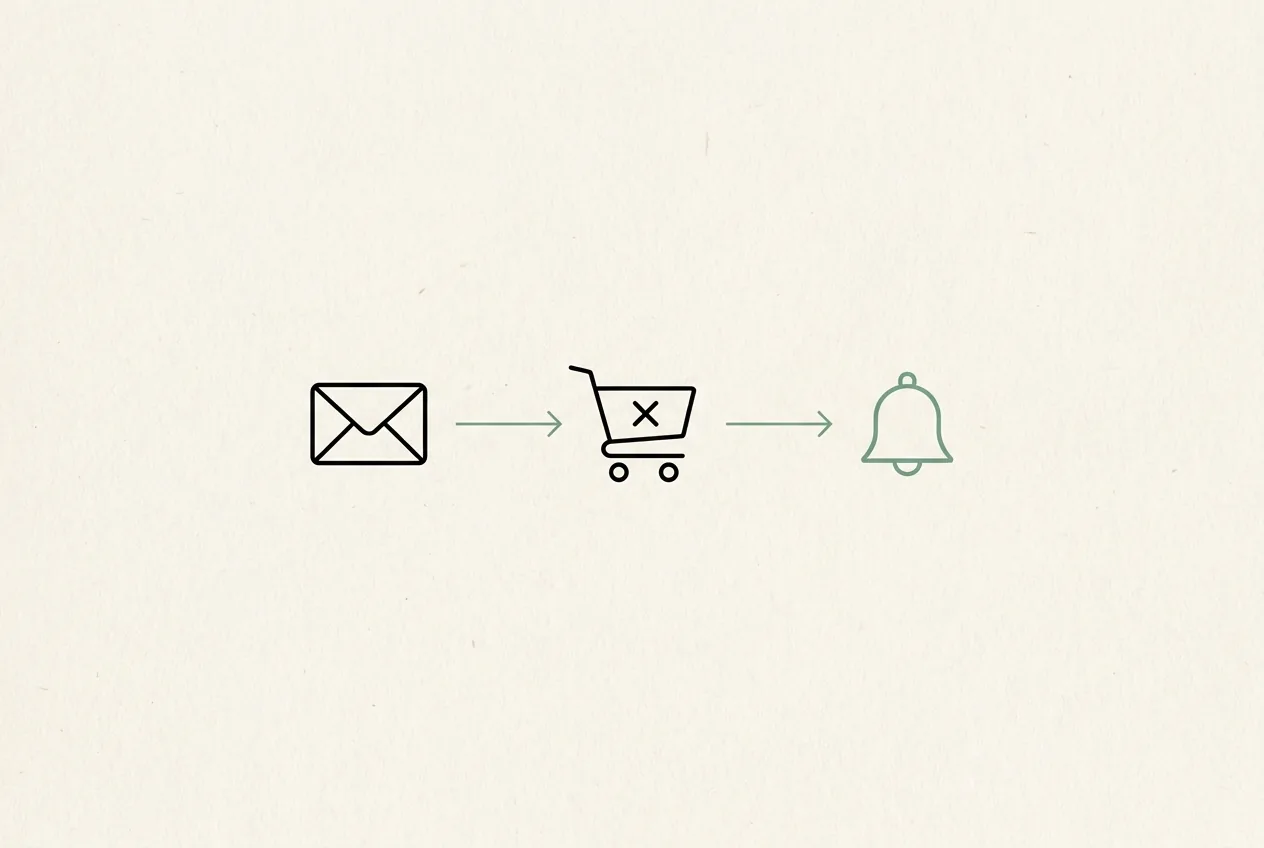
If lots of people reach the basket but don’t complete, you’ve already won half the battle — they want the product. You win them back with an abandoned-basket email flow, not with more traffic.
🔍 How to find out which one is YOUR problem
Don’t fix things at random. Work from the top down through the funnel and look for where the numbers collapse:
| Link | The question to ask | If it fails here |
|---|---|---|
| Click → visit | Is the right person coming? | Unqualified traffic / ad mismatch |
| Visit → product page | Do they stay or leave straight away? | Speed or unclear offer |
| Product → basket | Do they add to the basket? | Missing trust / the offer doesn’t convince |
| Basket → order | Do they complete? | Checkout with friction |
Find the step where you lose the most, and fix THAT first. Not everything at once.
And before you pump more budget into ads: if the page doesn’t convert, more traffic just means more money thrown away. Check first that the arithmetic makes sense — see what ROAS is and how to calculate it so you know whether your ads can actually be profitable.
In short
“I’ve got traffic but no sales” is almost always a conversion problem, not a quantity one. More traffic on top of a site that doesn’t convert = more money lost, not more sales.
The order to check: qualified traffic → speed → clarity of offer → trust → checkout. You fix the broken link, not the whole chain.
If you’ve looked over all of this and still can’t work out where it’s breaking, we can take a look together. We’ll audit your funnel, find the step that’s losing people, and tell you what’s worth fixing first — no waffle, just what we see in the data.
Read on
All articles →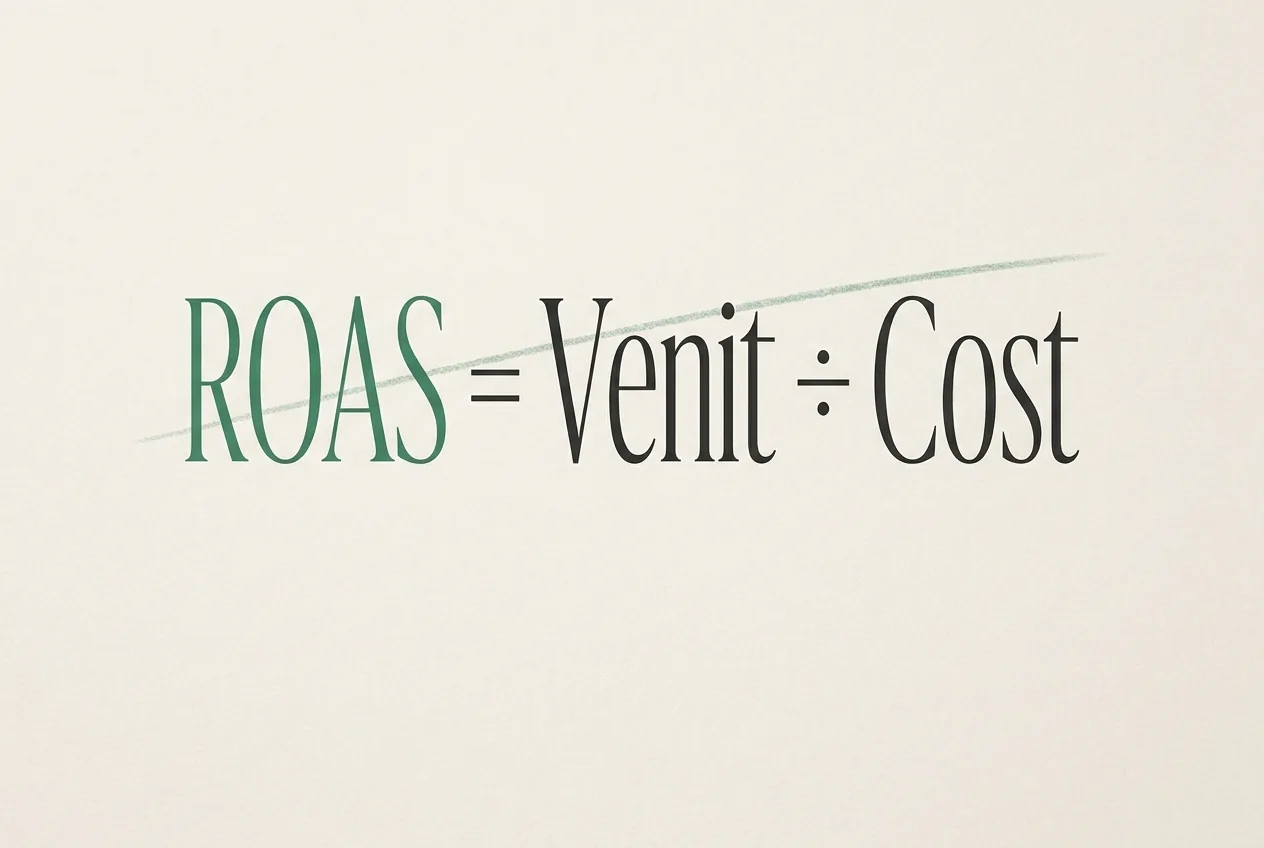
Let's audit your account. Free.
We'll tell you straight what we'd change first and what scaling potential we see.