

What is ROAS and how to calculate it (with simple examples)
ROAS is the number everyone talks about, but few use correctly. Here is what it means, how you calculate it and why a high ROAS does not automatically mean profit.
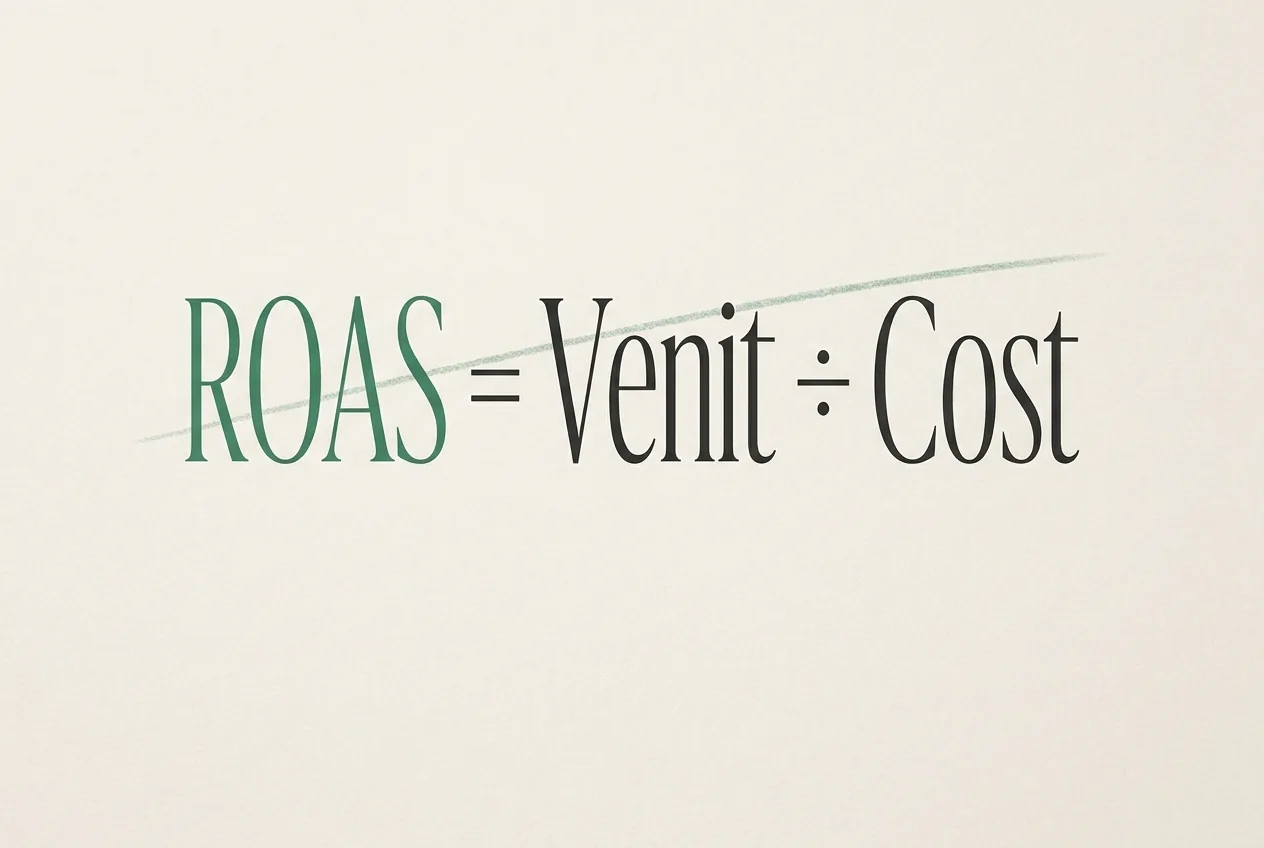
“I’ve got a ROAS of 4. Is that good?”
The question seems simple. The correct answer is: it depends. And this is exactly where most shops go wrong — they treat ROAS like a school grade, where higher = better, without looking at what sits behind it.
Let’s clear up what ROAS actually is, how it is calculated and — the important part — how you work out what value is good for YOU.
📌 What you’ll learn: What ROAS means, the exact formula, how to calculate the threshold at which ads become profitable and why ROAS on its own doesn’t tell you whether you’re making money.
📐 What ROAS means
ROAS = Return On Ad Spend. In plain terms: how much revenue every pound spent on ads brings in.
The formula:
ROAS = Revenue from ads / Ad spendIt is expressed as a multiplier. If you have a ROAS of 4x, it means that for every pound put into ads you generated 4 pounds of revenue.
A worked example, as simple as it gets:
Ad spend:          1,000
Revenue generated: 4,000
ROAS = 4,000 / 1,000 = 4x
That’s it. No magic. It’s a ratio.
⚠️ Why a 4x ROAS does NOT necessarily mean profit
This is the trap. Revenue is not profit. ROAS measures revenue, but you don’t live off revenue — you live off what’s left after you’ve paid for everything.
Think about what else comes out of that 4,000 in revenue:
- The cost of the products you sold.
- Shipping, packaging, payment fees.
- The ads (we’ve already subtracted those through ROAS).
- The rest of your business costs.
If your gross margin is small, a 4x ROAS can leave you at zero — or even in the red.
ROAS tells you how much revenue an ad brings in. It does NOT tell you whether you’re left with money in your pocket. Those are two different questions.
🧮 The break-even threshold: the number you really need to know
Before you celebrate or get upset about a ROAS, you need to know the value at which you start making money. This is called the break-even ROAS.
The formula:
Break-even ROAS = 1 / Gross marginGross margin = how much is left of the price after the cost of the product, as a percentage.
Hypothetical worked examples:
Gross margin 50% → break-even ROAS = 1 / 0.50 = 2x
Gross margin 40% → break-even ROAS = 1 / 0.40 = 2.5x
Gross margin 30% → break-even ROAS = 1 / 0.30 ≈ 3.3x
Gross margin 25% → break-even ROAS = 1 / 0.25 = 4x
Read this table carefully, because it changes everything:
| Your gross margin | ROAS at which you turn a profit |
|---|---|
| 50% | above 2x |
| 40% | above 2.5x |
| 30% | above ~3.3x |
| 25% | above 4x |
Now go back to the question from the start: “I’ve got a ROAS of 4. Is that good?”
- If your gross margin is 50%, a 4x ROAS is excellent — you’re well above break-even.
- If your gross margin is 25%, a 4x ROAS means you’re barely breaking even on the ads.
The same number, two opposite conclusions. That’s why ROAS without margin tells you nothing.
🔍 Watch out for how revenue is measured
There’s one more detail a lot of people ignore: the ROAS reported by the ad platforms (Meta, Google) is often generous with itself.
The platforms claim credit for sales they would have made anyway, or for sales they contributed little to. That means the ROAS in your dashboard can look better than the reality in your bank account.
We’re not saying ignore the platform’s ROAS. We’re saying don’t mistake it for the absolute truth. The bottom-line figure is what you see in your real sales, not what the ad reports about itself.
📊 How to use ROAS correctly, in practice
- Work out your gross margin first. Without it, ROAS is just a meaningless number.
- Set the break-even threshold using the formula above.
- Compare your actual ROAS with your threshold, not with what you’ve heard from others. Someone else’s “good” ROAS depends on THEIR margin, not yours.
- Track the trend, not a single day. ROAS swings from one day to the next; what matters is the average over a period.
- Look at the bigger picture too — not just paid ads, but your entire marketing efficiency.
In short
ROAS = revenue from ads divided by ad cost. It’s a useful ratio, but incomplete on its own. The real question isn’t “what ROAS do I have”, but “is my ROAS above the break-even threshold set by my margin?”.
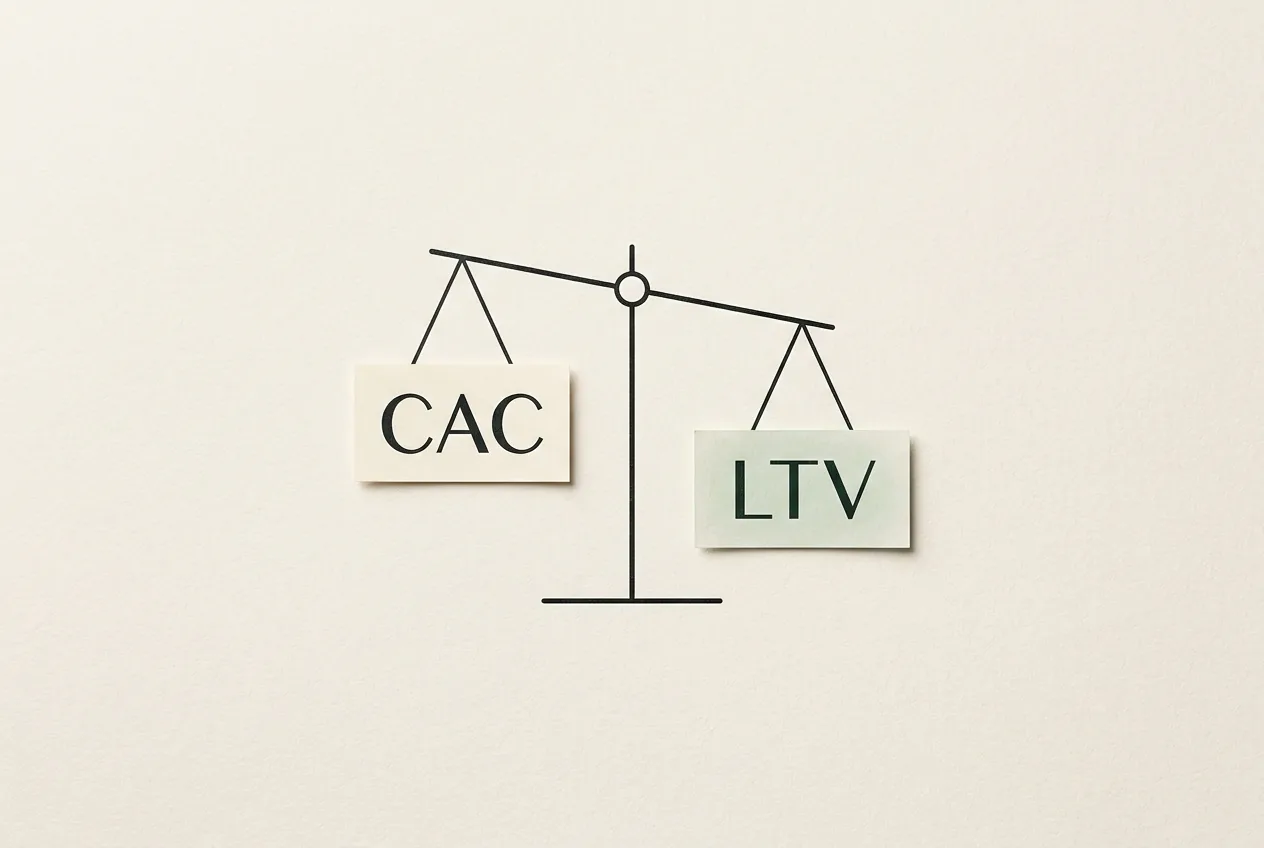
And ROAS isn’t the only number that matters. To know whether a customer is worth what you pay to acquire them, you also need CAC and LTV. And if you have traffic but the ads aren’t translating into orders, the problem may be further down the funnel — see why you have traffic but aren’t selling.
If you want to know exactly where you stand — what ROAS you have, what your real profit threshold is and whether your ads are working for you or against you — we can take a look at your numbers. No promises, just the arithmetic on your shop.
Read on
All articles →
Let's audit your account. Free.
We'll tell you straight what we'd change first and what scaling potential we see.